The growth of AI is a major technological trends that can cause dangerous for the world. It is concern about us and important to understand the potential risks of AI. To understand how will AI rule over the world, first of all we have to know that what is AI and how does it work?
What is AI?
AI stands for Artificial Intelligence. It’s a smart computer technology that helps machines think and learn like humans. It is designed to simulate human-like intelligence and cognitive abilities, allowing them to analyze data, make decisions and perform tasks without human intervention.
How many types of AI is?
AI can be categorized into two types:- Narrow AI & General AI.
Narrow AI refers to a systems that are designed to perform specific tasks and are limited in their capabilities. And on the other hand, General AI represents a systems that possess human-like intelligence and can understand, learn, and reason across a wide range of tasks.
What are the 4 main types of AI?
The four main types of AI are:
- Reactive Machines: It is the simplest form of AI and are designed to react to specific situations based on pre-defined rules. They do not have ability to learn from past experiences. These systems excel at specific tasks and can be highly efficient in performing them.
- Limited Memory: This is also known as “Learning AI”, can learn from historical data and past experiences to make better decisions. Unlike reactive machines, these AI systems have a limited form of memory, allowing them to store and access previous data to inform their decision-making process.
- Theory of Mind: It is a more advanced level of AI that aims to understand human emotions, beliefs, and intentions. These AI systems are designed to have a model of human-like cognition, allowing them to infer and understand the mental states of humans.
- Self-aware AI: This is also known as “Strong AI” or “Artificial General Intelligence (AGI)”, represents the highest level of AI sophistication. This type of AI would have consciousness and awareness similar to human intelligence, with the ability to not only understand emotions and beliefs but also to possess a sense of self-awareness.
History of AI
The roots of AI can be traced back to 1950 when Alan Turing published the influential paper “Computing Machinery and Intelligence”, proposing the Turing test as a measure of machine intelligence. In early 1950s and 1960s, the first AI programs were developed. These programs were rule-based systems that could perform simple tasks such as playing checkers or proving mathematical theorems. However, these early programs were not very successful at general-purpose intelligence. To know more about the history of AI click here.
Will AI Rule Over the World?
In a report based on the interview, Elon Musk says, “AI is more dangerous than mismanaged aircraft design or production maintenance or bad car production”. And the ‘Godfather of AI’ says his technology is a bigger threat than climate change, It’s not at all clear what you should do. Why they are scared about AI? Is AI Dangerous for Humans? Will AI destroy the world? Will AI replace the humans? Let’s find out!
How does AI work?
AI use various techniques, including machine learning, natural language processing, computer vision, and robotics. Machine learning algorithms, such as deep learning, enable AI to process vast amounts of data, recognize patterns, and make predictions. Natural language processing allows AI to understand and interact with human language. Computer vision enables AI to interpret visual information that allowing it to analyze and interpret images and videos. Robotics integrates to the smart machines can be controlled and programmed to carry out physical tasks efficiently.
Is AI Dangerous for Humans?
AI offers numerous benefits, there are concerns about its potential dangers. AI could lead to job displacement as automation replaces certain roles, leading to unemployment. Moreover, the collection and analysis of personal data raise privacy and security concerns. There are also ethical considerations regarding the development of autonomous weapons systems, which could pose a threat to humanity if misused.
The Potential Risks of AI
AI is used in various fields and it has huge amounts of data. It’s all about making our lives easier and more exciting with the help of smart technologies and machines. There are lots of benefits of AI, but has also some potential risks associated with this technology. Some of the potential risks of AI include:
- Job displacement: AI could automate many jobs, leading to widespread unemployment.
- Loss of privacy: AI could be used to collect and analyze vast amounts of personal data, which could pose a threat to privacy.
- Weaponization: AI could use our data to develop autonomous weapons systems that could pose a threat to humanity.
Why big Tech Companies laiding off workers/employees?
Big tech companies might lay off workers for various reasons related to their business strategies and market conditions. While AI and automation have the potential to increase productivity and efficiency, they can also lead to streamlining processes and reducing the need for manual labor. Therefore, ccompanies are adopting AI-driven solutions to cut costs and stay competitive.

Impacts of AI on Humans
The impact of AI on society is immense and has wide-ranging effects. AI-driven technologies are transforming industries such as healthcare, finance, manufacturing, and transportation. AI-powered chatbots and virtual assistants are enhancing customer service and user experiences. However, job displacement, privacy concerns, and ethical dilemmas are challenges that need to be addressed.
The current state of AI
In the present time, AI has already demonstrated remarkable capabilities. The most notable recent advances in AI include:
- Deep learning algorithms have revolutionized machine learning, enabling breakthroughs in speech recognition, image processing, and natural language understanding.
- Self-driving cars powered by AI are becomes reality.
- AI-driven recommendation systems are prevalent in online platforms, and virtual assistants like Siri and Alexa are part of everyday life.
Future of Artificial Intelligence
The future of AI holds tremendous promise. AI is likely to continue advancing in sophistication and becoming more integrated into various aspects of our lives. Applications of AI may include personalized medicine, climate change mitigation, poverty alleviation, and advancements in various scientific and technological domains.
Conclusion
Artificial Intelligence has come a long way but its beginnings has brought tremendous changes in our life. We now have different types of AI, like Narrow AI that focuses on specific tasks and General AI that aims to be as intelligent as humans. The development of both AI’s pose both opportunities and challenges.
AI has the potential to enhance our lives and solve complex problems. However, we must also be aware of the challenges it poses. For instance, AI could lead to job loss as it automates certain tasks, and there are concerns about how AI handles personal information, which could affect our privacy.
One crucial aspect is ensuring that AI is developed and used ethically. This means making sure it benefits humanity while avoiding any harmful consequences. As AI continues to progress, we must be responsible in its development and implementation to shape a positive future where AI enhances our lives rather than causing harm.
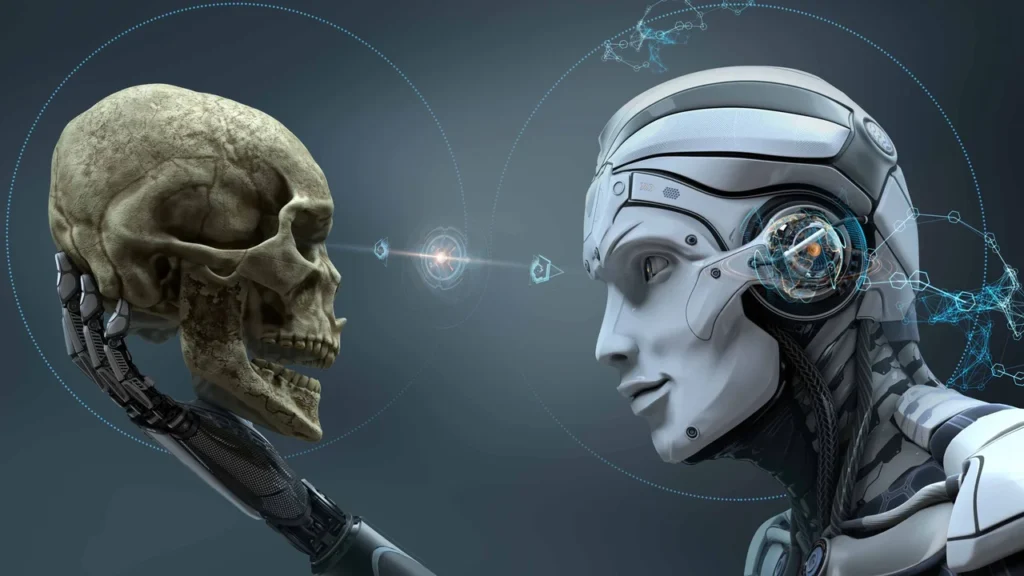
Here are some of the precautions that we can take to reduce the risks of AI:
- Develop ethical guidelines & laws for the development and use of AI.
- Create international agreements to ban the development of autonomous weapons systems.
Invest in research on AI safety. - Educate the public and spread awareness about the potential risks and benefits of AI.
By taking these steps, we ensure that AI will used for good and not for evil.
FAQ
Who is the father of AI?
John McCarthy, an American computer scientist, is known as the 'Father of Artificial Intelligence.' He coined the term 'Artificial Intelligence' and played a key role in establishing the field.
Who is the godfather of AI?
Geoffrey Hinton, known as the 'Godfather of Artificial Intelligence', has contributed significantly to AI development. Despite his groundbreaking work, he now warns passionately about the technology getting out of hand. He emphasizes the importance of responsible AI development to avoid potential risks and unintended consequences.
How much faster is AI than humans?
AI is often faster than humans in processing information and performing tasks. It can analyze data and make decisions much quicker, allowing it to complete tasks in seconds that might take humans hours or even days. However, AI still relies on the knowledge and programming provided by humans, so it's essential for both to work together effectively.
Who is smarter AI or humans?
As of now, humans are generally considered smarter than AI. While AI can perform specific tasks with incredible speed and accuracy, humans possess creativity, emotional intelligence, and complex problem-solving abilities that AI hasn't fully replicated yet. However, AI still relies on the knowledge and programming provided by humans. Its capabilities may evolve in the future.
Will AI destroy the world?
No, AI can not destroy the world. AI is a tool which is created and controlled by humans. It doesn't have the ability or intention to destroy the world. The future of AI largely depends on how we use and regulate it responsibly. If used wisely, AI can bring great benefits and advancements to our society.